Данные и интеграции
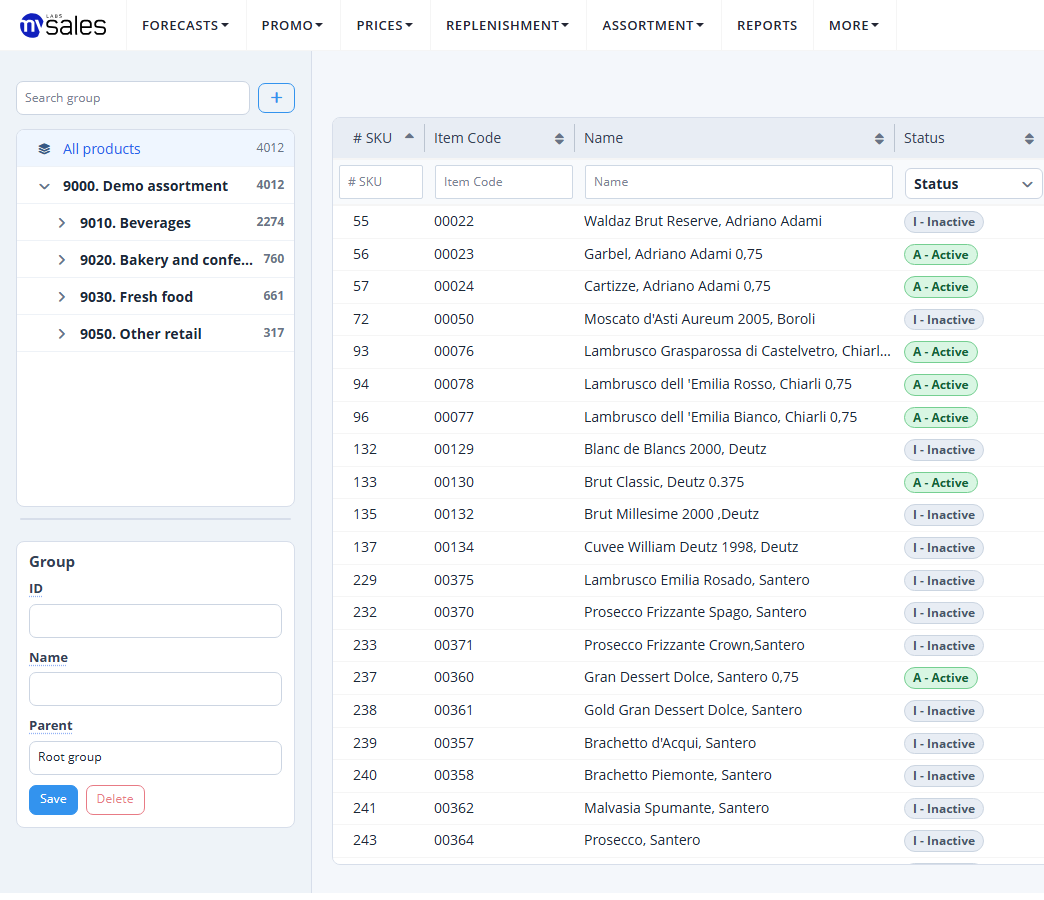
Экран мастер-данных товара
Модули MySales
Контролируемый операционный слой для товарных, магазинных, поставщицких и коммерческих данных, чтобы прогнозирование, пополнение, цены, промо и ассортимент работали на чистых входных данных.
Точность по устоявшимся товарам в Drogas
Рост товарооборота в Chudo Market после внедрения
Снижение списаний свежих товаров в Blyzenko
Единая платформа ИИ объединяет прогнозирование, пополнение, ценообразование и промо — сигналы автоматически передаются между модулями, поэтому заказы, цены и кампании всегда синхронизированы.
Планирование в ритейле зависит от надежных мастер-данных.
Если атрибуты SKU, группы, бренды, поставщики, единицы измерения, налоговые правила, сроки годности или связи с магазинами неполные либо противоречивые, автоматические решения наследуют эти ошибки.
MySales поддерживает управление мастер-данными как управляемый процесс, а не как статический справочник.
Команды могут вести справочные данные, проверять исходные поля и согласовывать изменения до того, как они повлияют на последующие процессы.
Ведите записи SKU с операционными атрибутами: кодом, названием, статусом, емкостью, единицей измерения, страной, производителем, брендом, налогами, сроком годности и историей обновлений.
Управляйте группами, подгруппами и деревьями категорий с количеством SKU, видами по филиалам и понятной ответственностью за изменения иерархии.
Находите отсутствующие, дублирующиеся или противоречивые атрибуты до того, как они попадут в прогнозирование, пополнение, ассортимент, цены или промо.
Стандартизируйте производителей, бренды, страны, магазины, поставщиков и другие справочники, чтобы команды работали с единым контролируемым словарем.
Отслеживайте, когда записи были обновлены, кто внес изменения и какие исходные поля питают каждый процесс планирования.
Управление мастер-данными повышает качество каждого модуля MySales, потому что снижает скрытую работу по очистке данных перед плановыми решениями.
Типичный MDM-процесс начинается с синхронизации исходных систем и продолжается контролируемой бизнес-проверкой.
Импортируйте данные о товарах, магазинах, поставщиках, брендах и категориях из ERP, POS, WMS и коммерческих систем.
Сопоставляйте исходные поля со справочниками и товарными иерархиями MySales.
Помечайте неполные, дублирующиеся, неактивные или противоречивые записи.
Давайте уполномоченным пользователям возможность проверять и обновлять атрибуты в контролируемых процессах.
Публикуйте проверенные мастер-данные в прогнозирование, пополнение, цены, промо и ассортимент.
Модуль работает лучше всего при подключении к системам, которые являются владельцами ключевых справочных данных ритейла.
MySales может показывать бизнес-пользователям технический контекст полей, сохраняя трассируемость источников для IT и data-команд.
Управление мастер-данными усиливает весь стек решений MySales.